
TongXi Industrial Zone, YongKang City, ZheJiang Prov., China.
| Quantity: | |
|---|---|
RY-DS162
RY
RY-DS162
304/316 stainless steel
carborundum insert
25*4mm
solid back
tape or glue stick
As a premier manufacturer and trusted supplier of accessibility safety solutions, we present the meticulously engineered 25mm stainless steel tactile indicator paving studs. Designed specifically for large-scale infrastructure and commercial developments, these indicators offer unmatched durability, precise tolerances, and seamless integration for your flooring projects.
Industrial-grade 304/316L stainless steel construction for ultimate longevity
High-friction black carborundum inlay for superior hazard warning
Precision-engineered solid back for rapid, non-destructive adhesive installation
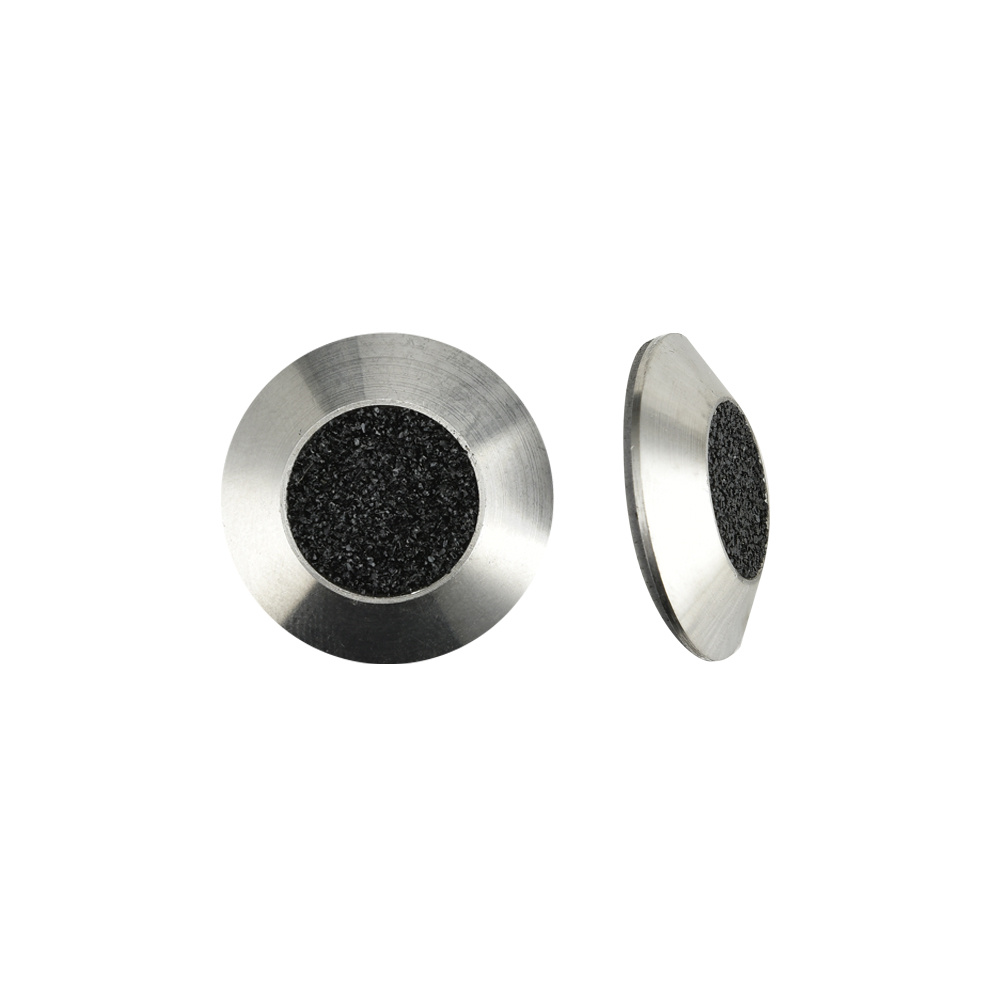
The 25mm Stainless Steel Tactile Indicator Paving Studs with Black Carborundum inlay represent the absolute pinnacle of architectural safety hardware. When you run your fingers across the surface, you immediately notice the stark, deliberate contrast between the smooth, cold precision of the milled stainless steel and the rugged, high-friction grip of the black carborundum. This textural juxtaposition is not merely aesthetic; it is a meticulously engineered tactile warning system designed to provide unmistakable underfoot feedback for the visually impaired. The metallic sheen of the steel housing perfectly frames the deep, light-absorbing matte black center, creating a striking visual contrast that alerts pedestrians to upcoming elevation changes or hazardous zones. Crafted to withstand the relentless pounding of heavy foot traffic, these paving studs emit a solid, resonant tone when struck, indicating their dense, solid-back construction. The seamless integration of these premium materials ensures an enduring, elegant finish that elevates the architectural integrity of any commercial space while prioritizing public safety and strict regulatory compliance.

Our engineering team maintains rigorous documentation for all accessibility hardware to ensure your procurement process meets exact project requirements. The following technical specifications detail the precise measurements, material compositions, and structural attributes of our tactile paving studs. These metrics are critical for architects, project managers, and contractors who demand strict adherence to building codes and seamless integration into existing flooring systems. By reviewing these parameters, you can verify the exact tolerances and application methods required for your specific commercial environment.
| Specification | Details |
|---|---|
| Product Model | RY-DS162 |
| Main Material | 304/316L Stainless Steel |
| Surface Treatment / Inlay | Black Carborundum |
| Product Diameter | 25 mm (Tolerance: ± 0.2 mm) |
| Product Thickness | 4 mm (Tolerance: ± 0.2 mm) |
| Bottom Structure | Solid back |
| Installation Method | Tape or adhesive stick |
| Target Audience | Blind or visually impaired individuals |
| Application Scenarios | Commercial buildings, office buildings, banks, hospitals, healthcare facilities, etc. |
Integrating our tactile indicator studs into your infrastructure projects delivers immediate enhancements to both safety and aesthetic appeal. These carefully crafted units are designed to solve complex accessibility challenges while minimizing long-term facility maintenance.
The integrated black carborundum center dramatically increases the coefficient of friction, ensuring that pedestrians maintain secure footing even in damp, high-moisture, or oil-prone environments. This significantly reduces liability risks associated with slip-and-fall accidents in public spaces.
By combining the reflective properties of premium stainless steel with the light-absorbing matte finish of the carborundum, these studs naturally draw the eye. This provides clear, high-visibility warnings to those with low vision, guiding them safely through complex architectural layouts.
The solid back design prevents structural deformation under the stress of heavy rolling loads, such as medical carts, luggage trolleys, or maintenance equipment. This robust construction preserves the pristine appearance of your flooring and prevents individual studs from caving or cracking.
The adhesive-ready base eliminates the need for destructive concrete drilling or core boring. This allows your maintenance teams to upgrade facility safety profiles with zero noise pollution, zero dust generation, and minimal operational downtime, keeping your business running smoothly.
Unlike bulky, visually intrusive rubber mats, these individual metallic studs blend seamlessly into high-end flooring materials like marble, granite, or polished concrete. They provide essential safety functions while maintaining the sophisticated, premium atmosphere of modern commercial spaces.
To fully understand the value these tactile indicators bring to large-scale commercial developments, it is essential to evaluate their performance across several critical dimensions. From material science to regulatory compliance, every aspect of these studs has been optimized for professional deployment.
Forged from industrial-grade 304 and 316L stainless steel, these indicators boast extraordinary resistance to corrosion, oxidation, and abrasive wear. They are specifically engineered to endure the punishing conditions of high-traffic transit hubs and exterior environments, drastically reducing your long-term replacement and maintenance expenditures.
The precision-inlaid black carborundum serves a dual purpose. It delivers superior kinetic friction to prevent slip-and-fall incidents, while simultaneously creating a stark visual contrast against the metallic rim. This craftsmanship maximizes the warning efficacy for visually impaired individuals navigating complex spaces.
With a standardized diameter of 25mm and a thickness of 4mm, each stud is manufactured under strict quality control protocols that limit variance to a mere ±0.2mm. This microscopic tolerance guarantees absolute flatness and uniform consistency across massive installation areas, easily satisfying the most rigorous engineering inspection standards.
Designed with the contractor's timeline in mind, the solid back structure is optimized for tape or adhesive stick installation. This non-invasive method completely bypasses the need for heavy drilling or substrate destruction, accelerating project completion rates and significantly lowering labor costs on the job site.
Universally adaptable, these tactile warning nails are the ideal compliance solution for hospital wards, elevator lobbies, emergency stairwells, and bank concourses. They provide essential directional guidance and hazard alerts, ensuring your architectural projects effortlessly pass stringent international accessibility audits, including ADA regulations.
Selecting the right manufacturing partner is just as critical as selecting the right hardware. As a dedicated supplier of architectural safety components, we provide unparalleled support to procurement managers, architects, and construction firms globally. Our commitment to excellence ensures your projects are delivered on time, on budget, and up to code.
By controlling the entire production lifecycle, we eliminate intermediary markups. This allows us to offer you highly competitive pricing for large-volume procurement without ever sacrificing material quality or engineering precision.
Every batch of stainless steel tactile indicators undergoes exhaustive stress, corrosion, and friction testing in our advanced laboratories. We guarantee that they meet or exceed international safety mandates before they are ever packed and shipped to your job site.
We maintain robust inventory levels and utilize optimized global logistics networks. This infrastructure ensures that even the most demanding project deadlines are met with prompt, reliable deliveries, keeping your construction schedules entirely on track.
Our team of engineering specialists is always available to consult on installation best practices, adhesive selection, and layout configurations. We partner with your site managers to ensure your implementation is flawless, compliant, and efficient from day one.
We understand that specifying architectural hardware requires meticulous attention to detail. Below, we have compiled the most common technical inquiries from our commercial clients to assist you in your evaluation and planning processes.
For optimal bonding on non-porous surfaces like polished stone, terrazzo, or ceramic tile, we recommend using high-strength, two-part structural epoxy or specialized polyurethane construction adhesives. Ensure the substrate is completely degreased, dust-free, and dry prior to application for maximum adhesion.
Yes. The 316L stainless steel option contains molybdenum, which significantly enhances its resistance to chloride-induced pitting and crevice corrosion. This makes it the perfect choice for maritime facilities, coastal properties, or areas frequently subjected to heavy de-icing salts and harsh cleaning chemicals.
Carborundum (silicon carbide) is one of the hardest materials available, second only to diamond. It is thermally bonded and securely recessed into the stainless steel housing, ensuring it will not easily chip, fade, or wear smooth, even after years of continuous, heavy pedestrian traffic.
Absolutely. The 25mm diameter, 4mm profile height, and high visual contrast design are explicitly engineered to align with major global accessibility guidelines. This includes the Americans with Disabilities Act (ADA) and various international building codes for tactile ground surface indicators (TGSI).
While specific building codes may vary slightly by local jurisdiction, standard architectural practice dictates a center-to-center spacing of 50mm to 65mm. This specific grid pattern ensures optimal tactile feedback for white canes and underfoot detection without creating a tripping hazard for other pedestrians.
Yes, to support large-volume installations, we can supply interlocking installation templates. These templates are designed to maintain the exact ±0.2mm tolerance spacing across vast floor plans, dramatically speeding up the application process and ensuring perfect geometric alignment throughout the entire facility.


